
 EN
EN
Choosing the best honey bottling equipment for high viscosity products starts with one clear principle: thick products behave differently at every stage of filling, sealing, and transfer. Honey does not flow like water, and that difference changes pump selection, filling accuracy, capping stability, and cleaning strategy. If your process does not account for viscosity behavior, you will see slow throughput, weight variation, dripping, and container contamination. The right honey bottling equipment is therefore not just a packaging purchase, but a production control decision.
For B2B operations, equipment selection must connect process physics with commercial goals such as labor efficiency, batch consistency, and downtime reduction. The best honey bottling equipment for one factory may underperform in another if container formats, temperature control, and line speed requirements differ. This guide explains how to evaluate honey bottling equipment in a practical, engineering-led way so you can match machine design to product behavior and production targets. The focus remains on high viscosity performance, not generic bottling theory.
Define Process Requirements Before Comparing Machine Models
Map product viscosity behavior across real production temperatures
Before evaluating any honey bottling equipment, document how your product viscosity changes during a full shift. Honey and similar high viscosity products can vary significantly between morning startup and stable operating temperature. A machine that performs well with warm product can become inconsistent when viscosity increases during cooler periods. Your viscosity map should include expected temperature range, flow response, and acceptable fill tolerance.
This baseline matters because honey bottling equipment is usually specified by speed and fill volume under ideal conditions. In real production, ideal conditions rarely hold for every hour. By defining actual viscosity behavior first, you can judge whether servo-driven piston fillers, positive displacement systems, or heated transfer components are required. That avoids selecting honey bottling equipment that looks efficient on paper but struggles on your floor.
Clarify container portfolio and closure complexity early
Many teams evaluate honey bottling equipment around one flagship bottle, then discover problems when secondary SKUs are introduced. Neck diameter, bottle height, shoulder geometry, and closure torque requirements all influence filling and capping stability. High viscosity products amplify these constraints because delayed product settling can interfere with cap placement. A realistic container matrix should be part of your machine brief from day one.
The best honey bottling equipment for mixed packaging programs includes fast changeover design, repeatable positioning, and stable cap feeding under sticky operating conditions. This reduces adjustment time when moving between jars and squeeze bottles. It also lowers the risk of cosmetic defects caused by stringing or overflow. In high viscosity packaging, flexibility is not a convenience feature; it is a core productivity factor.
Prioritize Filling Technology That Controls Thick Product Flow
Select metering architecture based on accuracy under viscosity load
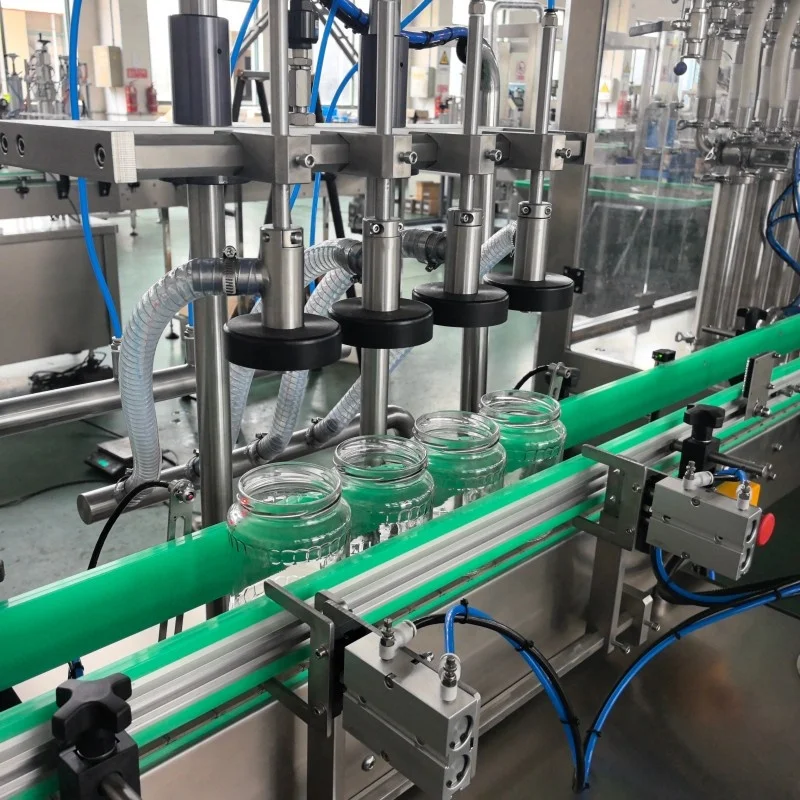
Metering method is the heart of honey bottling equipment performance. For high viscosity products, volumetric control must remain stable despite resistance in hoses, valves, and nozzles. Piston-based systems are often preferred because they can deliver controlled displacement even when flow is slow. Servo control adds repeatability by allowing precise stroke profiles for start, fill, and cutoff.
When comparing honey bottling equipment, ask for performance data under product conditions similar to yours, not thin-liquid benchmarks. Fill accuracy at different speeds should be tested alongside drip behavior and nozzle cleanliness. Machines that maintain tight tolerance only at low speed may not support growth targets. The right choice balances accuracy, speed, and clean cutoff in one integrated design.
Control stringing, dripping, and nozzle contamination
High viscosity products often form tails at nozzle exit, which can lead to bottle rim contamination and cap seal issues. Effective honey bottling equipment addresses this with anti-drip nozzles, suck-back control, and synchronized nozzle motion. Product cutoff timing is as important as fill volume itself. Poor cutoff can erase gains from accurate metering by creating rework and manual wiping tasks.
You should also evaluate whether the honey bottling equipment supports bottom-up filling or adjustable nozzle insertion depth for different containers. These features reduce air entrapment and improve visual fill quality. In B2B supply environments where appearance and net content consistency are audited, these details directly affect customer acceptance. Flow control is therefore a quality system, not just a speed setting.
Evaluate Line Integration, Throughput Stability, and Changeover Efficiency
Balance filler, capper, and conveyor as one system
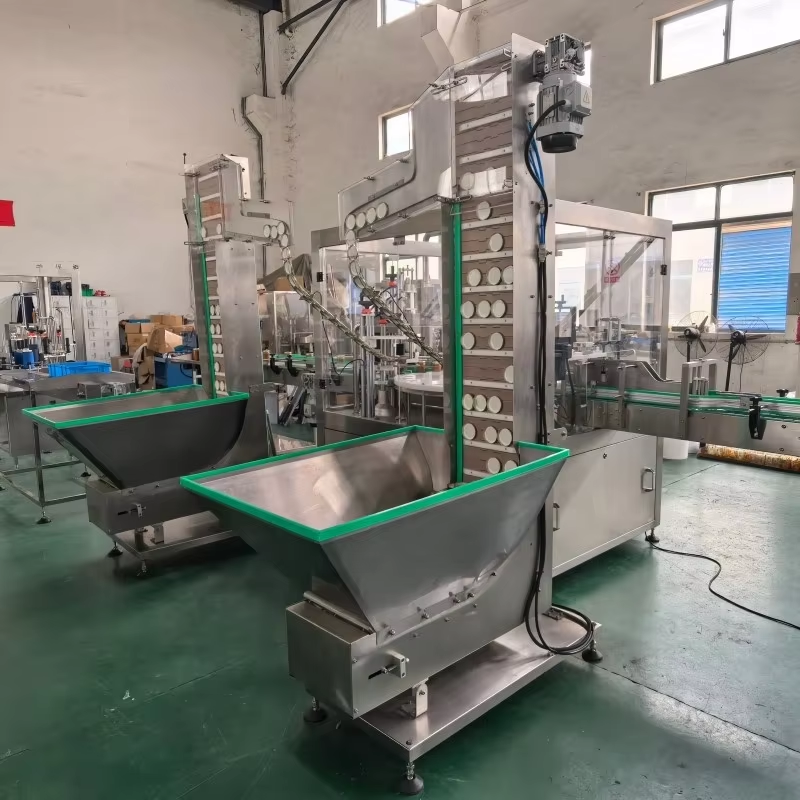
A common mistake is selecting honey bottling equipment as isolated stations instead of a coordinated line. High viscosity products can create micro-delays between fill completion and cap application, especially when product leveling is slow. If conveyor pacing and capper timing are not matched, bottles accumulate, tip, or enter the capping zone unstable. That quickly reduces effective output even when nominal machine speed looks high.
Integrated control logic helps honey bottling equipment maintain steady flow from infeed to capping. Sensor feedback, star wheel alignment, and controlled bottle spacing are critical when product is sticky and cleanup events are costly. A line-level perspective also improves OEE by reducing stop-and-start behavior. Throughput stability is usually more profitable than short bursts of peak speed.
Design for fast, repeatable SKU transitions
In many industrial plants, shift plans include multiple products or pack sizes. Honey bottling equipment should support these realities through indexed adjustment points, recipe storage, and accessible contact parts. Manual trial-and-error changeovers consume labor and increase startup scrap. With high viscosity products, each restart can also mean extra cleaning due to drips and residue.
Evaluate changeover time based on real operator workflow, not only vendor claims. The best honey bottling equipment allows predictable transition from one format to another with minimal tools and clear parameter control. This improves schedule confidence and reduces dependence on a single expert technician. Over time, changeover discipline can deliver more value than small differences in top speed.
Assess Hygiene Design, Cleaning Strategy, and Long-Term Reliability
Focus on cleanability of product-contact paths
Because high viscosity products adhere strongly to surfaces, cleanability is a decisive criterion for honey bottling equipment. Product-contact zones should minimize dead legs, sharp internal corners, and hard-to-reach gasket cavities. Smooth flow paths lower residue buildup and reduce flavor carryover risk between batches. This is especially important for operations handling multiple formulations.
Ask how the honey bottling equipment supports cleaning method selection, including manual washdown or CIP-compatible architecture where appropriate. Accessibility of valves, quick-release fittings, and nozzle disassembly time should be verified during technical review. Cleaning complexity directly affects uptime and sanitation consistency. Equipment that is easy to clean is also easier to validate and maintain.
Verify component durability and support readiness
Sticky products increase mechanical load on pumps, seals, and moving assemblies, so reliability cannot be assumed from general food-line specs. Durable honey bottling equipment uses wear-resistant contact materials and stable actuator design suited for repeated high-resistance cycles. Electrical and pneumatic layout should also protect against washdown exposure and residue ingress. Reliability is built from detail-level design choices, not marketing labels.
Lifecycle performance improves when spare-part strategy and technical support are defined before commissioning. If you are reviewing a complete honey bottling equipment solution, confirm lead times for critical components and troubleshooting response process. Planned maintenance windows should align with your production calendar. In high viscosity packaging, rapid recovery from faults is a major competitive advantage.
Build a Selection Framework Tied to Business Outcomes
Translate technical criteria into measurable plant KPIs
To choose the best honey bottling equipment, convert engineering features into business metrics your leadership team tracks. Fill accuracy relates to giveaway cost, stable capping relates to complaint reduction, and cleaning time relates to available production hours. This translation creates objective decision logic and prevents procurement from focusing only on purchase price. In B2B environments, total operating impact matters more than initial quotation differences.
Run pilot or FAT-style validation around your real product and container set, then score each honey bottling equipment option against agreed KPI thresholds. Include startup loss, sustained speed, and post-cleaning restart consistency. The model that performs best across the full cycle is usually the right long-term investment. Structured evaluation reduces risk and shortens post-installation optimization time.
Plan scalability without sacrificing current efficiency
The best honey bottling equipment should meet current demand while leaving room for growth in output, SKU count, or packaging format. Scalable architecture may include modular filling heads, software-expandable recipes, and conveyor layouts ready for downstream automation. Growth readiness should not compromise present-day operability, so simplicity for current operators still matters. A balanced roadmap prevents overbuying while avoiding early obsolescence.
When selection teams align process data, line integration, hygiene design, and KPI-based validation, honey bottling equipment decisions become clearer and more defensible. You move from generic machine comparison to title-specific decision making for high viscosity products. That is the practical path to choosing equipment that supports quality, efficiency, and reliable industrial output. The strongest results come from fit, not from broad claims.
FAQ
What makes high viscosity filling different from standard liquid filling?
High viscosity products resist flow, so honey bottling equipment must deliver stronger and more controlled displacement while maintaining clean cutoff. Standard liquid systems may run fast with thin products but struggle with stringing, dripping, and inconsistent fills when product is thick. The process also places more demand on nozzle design and capping synchronization. That is why viscosity-specific validation is essential.
How much does temperature control influence honey bottling equipment performance?
Temperature strongly affects flow behavior, and small shifts can change fill speed and accuracy. Honey bottling equipment should be selected with expected operating temperature range in mind, including startup and ambient variation. Stable product temperature improves metering consistency and reduces contamination risk at the bottle neck. In many plants, temperature management is a core part of performance control.
Can one line handle both honey and other thick sauces efficiently?
Yes, but only when honey bottling equipment is configured for multi-product cleanability, recipe control, and container flexibility. Product-contact materials, pump selection, and cleaning access must suit different rheology profiles. Efficient crossover also depends on repeatable changeover settings and validated wash procedures. Without those elements, multi-product operation can create downtime and quality drift.
Which KPI should be prioritized first when selecting equipment?
Start with sustained acceptable output at target fill accuracy, because both revenue and cost control depend on that balance. Honey bottling equipment that runs quickly but misses tolerance can increase giveaway and rework, while very accurate but slow systems can cap your capacity. After that, prioritize cleaning time and changeover repeatability. These factors determine how much real production time you can capture each week.
Table of Contents
- Define Process Requirements Before Comparing Machine Models
- Prioritize Filling Technology That Controls Thick Product Flow
- Evaluate Line Integration, Throughput Stability, and Changeover Efficiency
- Assess Hygiene Design, Cleaning Strategy, and Long-Term Reliability
- Build a Selection Framework Tied to Business Outcomes
- FAQ