
 EN
EN
Choosing the right sauce filling machine for large scale production is one of the most consequential decisions a food manufacturer can make. The wrong choice can lead to production bottlenecks, frequent downtime, inconsistent fill weights, and significant financial losses. When output volumes are high and customer commitments are demanding, a sauce filling machine must perform reliably, accurately, and continuously across long production shifts.
Not every sauce filling machine on the market is built for industrial-scale demands. Some machines are designed for small batch or mid-range operations, while others are engineered specifically for high-throughput environments. Understanding the distinction between these categories — and knowing what specifications actually matter at scale — allows production managers to make confident, data-supported purchasing decisions. This article explains the key selection factors that determine which sauce filling machine is best suited for large scale production.
Why Scale Changes What You Need in a Sauce Filling Machine
Volume Output and Throughput Capacity
At the heart of large scale production is throughput. A sauce filling machine intended for high-volume output must deliver a consistently high number of filled containers per hour without sacrificing accuracy. Industrial-grade sauce filling machine models are typically rated for several thousand containers per hour, depending on container size and product viscosity. When evaluating a sauce filling machine for scale, always confirm the rated speed under real operating conditions, not just peak laboratory performance. Actual throughput under continuous production is the figure that matters most.
A sauce filling machine used at scale must also handle extended run times. Machines that perform well for short bursts but require frequent pauses for recalibration or cleaning are not suitable for large scale production environments. Look for a sauce filling machine that supports long uninterrupted cycles while maintaining fill weight consistency across every container in the batch.
Automation Level and Integration Capability
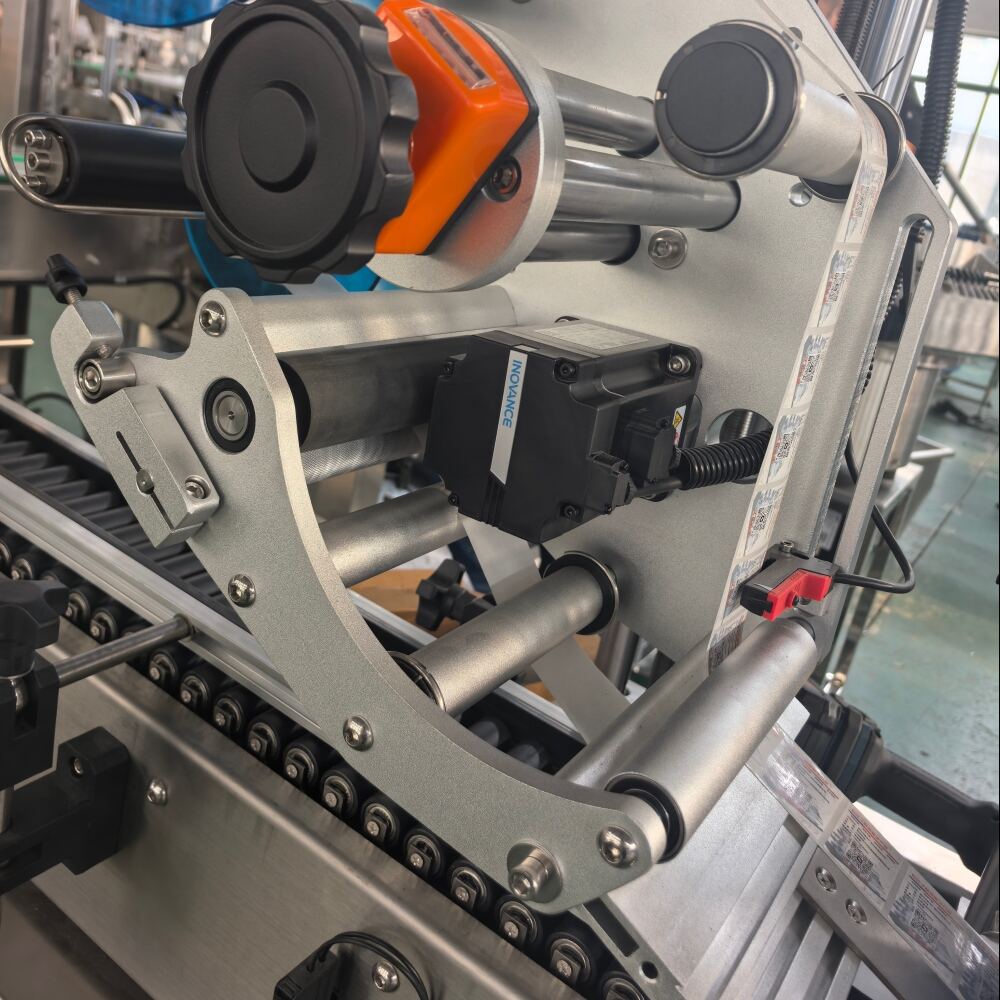
Manual or semi-automatic filling equipment introduces too many variables at high volumes. A fully automatic sauce filling machine eliminates operator-dependent variation and allows the machine to self-regulate filling parameters. For large scale production, the sauce filling machine should integrate seamlessly with upstream and downstream equipment, including conveyors, capping machines, labeling systems, and palletizers. This end-to-end integration is what transforms a single sauce filling machine into part of a complete production line.
Key Technical Criteria for High-Volume Sauce Filling Machines
Viscosity Compatibility and Pump Type
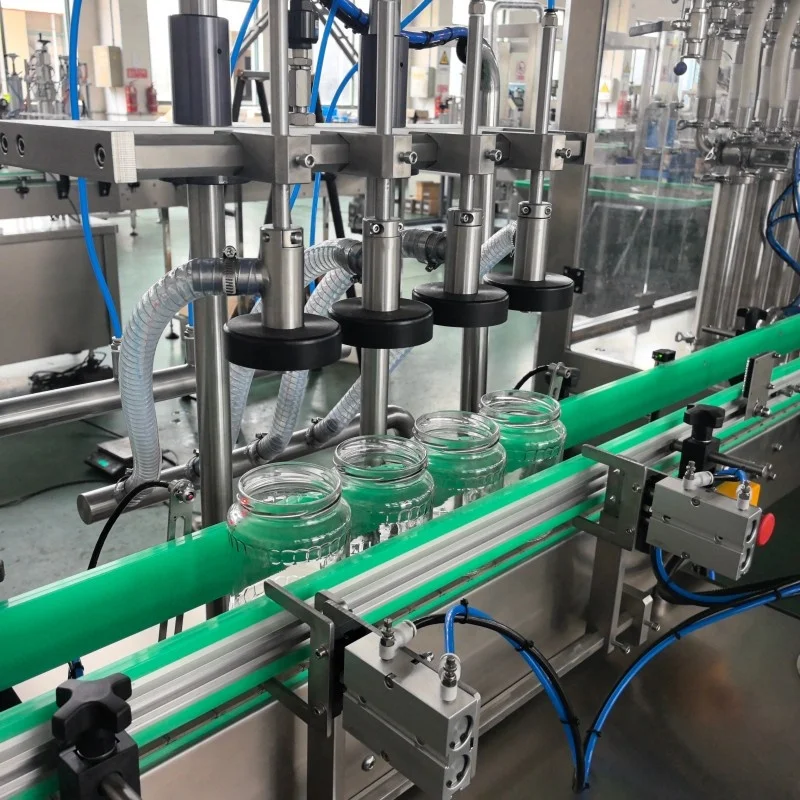
Sauce products vary enormously in viscosity — from thin vinegars and soy sauces to thick peanut butter, chili sauce, and jam. A sauce filling machine designed for large scale production must be matched to the viscosity range of the product being filled. Piston-type sauce filling machine models are typically preferred for thick, chunky, or paste-like products because they provide precise volumetric displacement regardless of flow resistance. For thinner, more liquid-like sauces, gear pump or peristaltic pump designs may offer better speed and consistency.
Selecting a sauce filling machine with the wrong pump type for your product viscosity leads to poor fill accuracy, clogging, and excessive maintenance demands. At large scale, these issues multiply rapidly and can disrupt entire production schedules. Always match the sauce filling machine pump mechanism to the actual rheological properties of your product rather than relying on generic specifications.
Fill Accuracy and Weight Control
Fill accuracy becomes increasingly critical as production volume increases. A sauce filling machine with even a small systematic fill error will generate significant product giveaway or underfill violations when multiplied across thousands of containers per shift. High-performance sauce filling machine systems incorporate closed-loop feedback mechanisms, allowing automatic correction of fill volumes in real time. Net weight filling technology, which uses load cells to verify each fill before the container moves on, is a strong indicator that a sauce filling machine is built for serious production environments.
Construction Quality and Cleanability
Large scale sauce production demands equipment that can withstand rigorous sanitation protocols. A sauce filling machine intended for industrial use should be constructed from food-grade stainless steel throughout all product-contact surfaces. The machine design must support CIP (clean-in-place) or quick-disassembly cleaning to minimize downtime between product changeovers. A sauce filling machine that requires lengthy manual disassembly for cleaning is not practical when production schedules are tight and turnaround between batches is measured in minutes rather than hours.
Evaluating Sauce Filling Machine Suitability for Your Specific Scenario
Container Type, Size Range, and Changeover Flexibility
Large scale sauce producers frequently run multiple SKUs across different container sizes and formats. A sauce filling machine that requires time-consuming mechanical adjustments for every changeover will reduce overall equipment effectiveness significantly. Servo-driven sauce filling machine platforms allow rapid parameter changes through a digital control panel, minimizing downtime and supporting flexible production scheduling. If your facility produces sauce in bottles, jars, pouches, or buckets at varying fill volumes, confirm that the sauce filling machine supports the full range of your container portfolio before committing to a purchase.
Maintenance Reliability and Spare Parts Availability
At large scale, unplanned downtime carries a high operational cost. A sauce filling machine used in high-throughput environments must be supported by a reliable maintenance ecosystem. This means easy access to spare parts, clear technical documentation, and responsive after-sales service from the equipment supplier. Evaluate the sauce filling machine supplier's track record in your industry and confirm that critical wear components — seals, nozzles, pistons — are readily available without long lead times. A sauce filling machine with excellent performance specifications but poor support infrastructure can become a liability at scale.
Total cost of ownership is another factor that separates a practical sauce filling machine investment from a short-sighted one. A higher initial investment in a well-engineered sauce filling machine often delivers lower per-unit cost over time through reduced waste, fewer breakdowns, and higher sustained throughput. When comparing options, calculate the sauce filling machine value over a three-to-five-year horizon rather than focusing only on upfront purchase price.
FAQ
What type of sauce filling machine is best for thick sauces at high volumes?
A piston-type sauce filling machine is generally the best choice for thick, viscous products like peanut butter, chili sauce, or jam at high production volumes. Piston mechanisms deliver consistent volumetric displacement regardless of product resistance, making them reliable and accurate across extended production runs. For large scale output, look for a sauce filling machine with multi-head piston configurations to maximize throughput.
How many containers per hour should a large scale sauce filling machine handle?
The appropriate throughput depends on your specific production targets, but most industrial-grade sauce filling machine systems used in large scale facilities are rated for at least 1,500 to 6,000 containers per hour. The actual figure varies based on container size, product viscosity, and fill volume. Always confirm rated speed under realistic production conditions rather than using maximum theoretical capacity as your benchmark when selecting a sauce filling machine.
Can a single sauce filling machine handle multiple sauce products with different viscosities?
Yes, many modern sauce filling machine models are designed with adjustable pump settings and interchangeable filling components that allow one machine to handle a range of product viscosities. However, performance across all viscosity ranges may not be equal. For the best results at large scale, consult with your sauce filling machine supplier about the viscosity range the equipment was specifically engineered to handle, and confirm that changeover between different products can be completed quickly and hygienically.