
 EN
EN
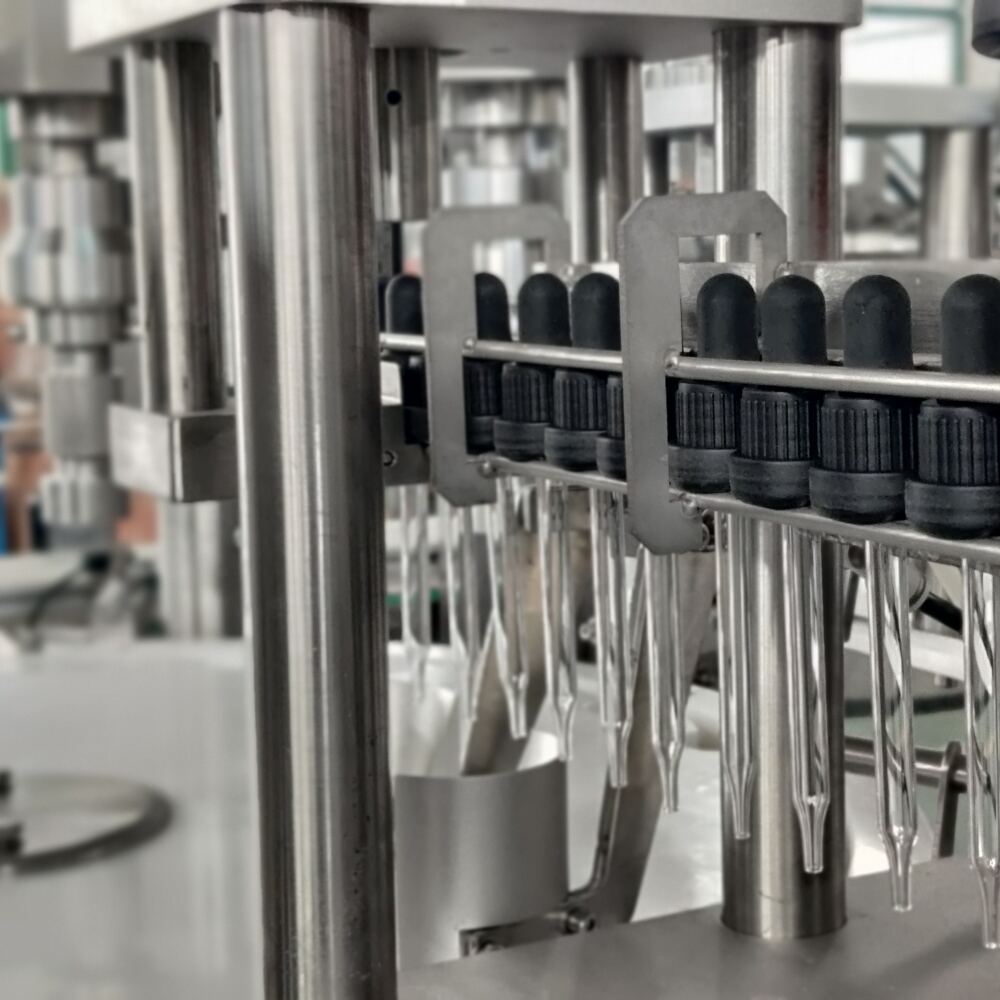
Industrial liquid packaging operations demand exceptional accuracy when dispensing products into containers, making precision filling equipment essential for maintaining quality standards and regulatory compliance. A piston pump filling machine represents one of the most reliable technologies available for achieving consistent volume control across diverse liquid viscosities and container formats. These sophisticated systems utilize positive displacement principles to deliver exact measurements while minimizing product waste and ensuring uniform fill levels throughout production runs.
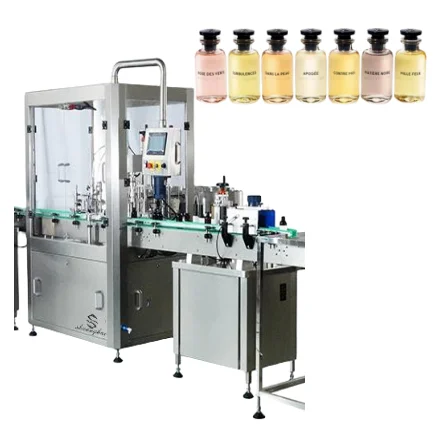
Positive Displacement Technology Fundamentals
Core Operating Principles
The fundamental advantage of a piston pump filling machine lies in its positive displacement mechanism, which creates a sealed chamber that precisely controls liquid volume during each filling cycle. Unlike gravity or pressure-based systems that can vary based on external conditions, positive displacement technology ensures consistent volumetric accuracy regardless of liquid viscosity fluctuations or ambient pressure changes. The piston creates a vacuum during its retraction phase, drawing a predetermined volume of liquid into the cylinder chamber.
During the forward stroke, the piston forces the captured liquid through calibrated outlets directly into waiting containers. This mechanical action eliminates variables that commonly affect other filling technologies, such as liquid density variations or temperature-induced viscosity changes. The sealed system prevents air incorporation and maintains product integrity while delivering repeatable results across thousands of filling cycles.
Precision Control Mechanisms
Modern piston pump filling machine designs incorporate servo-driven actuators that provide precise control over piston stroke length and speed, enabling operators to fine-tune dispensing volumes with exceptional accuracy. These servo systems can adjust stroke parameters in real-time, compensating for minor variations in liquid characteristics or environmental conditions. Advanced control algorithms monitor filling performance continuously, making micro-adjustments to maintain target volumes within tight tolerances.
The integration of digital feedback systems allows operators to program specific dispensing parameters for different product formulations, storing recipes that can be recalled instantly when changing between production runs. This programmability reduces setup time and eliminates manual calibration errors that can compromise filling accuracy. Position sensors provide continuous feedback on piston location, ensuring consistent stroke completion and preventing incomplete fills.
Volume Accuracy Implementation
Calibration Procedures
Achieving optimal performance from a piston pump filling machine requires systematic calibration procedures that establish baseline accuracy parameters and verify ongoing precision throughout production operations. Initial calibration involves running test cycles with known liquid volumes, measuring actual dispensed quantities using precision scales, and adjusting piston stroke parameters to achieve target specifications. This process typically involves multiple iterations to account for system settling and component thermal expansion.
Regular recalibration schedules maintain accuracy over extended operating periods, compensating for normal component wear and ensuring consistent performance. Many modern systems include automated calibration routines that perform self-checks during scheduled maintenance windows, alerting operators to any deviations from established parameters. These automated procedures reduce human error and provide documented verification of system accuracy for quality control records.
Quality Control Integration
Contemporary piston pump filling machine installations incorporate sophisticated quality control systems that monitor individual container fills and reject products that fall outside predetermined tolerance ranges. In-line weighing systems capture real-time fill weights, comparing actual values against target specifications and automatically removing non-conforming units from production lines. This continuous monitoring ensures that only products meeting strict quality standards reach consumers.
Statistical process control capabilities track filling performance trends over time, identifying potential issues before they impact product quality. These systems generate detailed reports documenting fill accuracy, rejection rates, and system performance metrics that support regulatory compliance and continuous improvement initiatives. Data logging capabilities provide complete traceability for each production batch, facilitating rapid response to quality issues if they arise.
Application-Specific Advantages
Viscous Liquid Handling
The positive displacement design of a piston pump filling machine excels in handling viscous liquids that challenge other filling technologies, maintaining consistent dispensing accuracy regardless of product thickness or flow characteristics. Unlike gravity-fed systems that struggle with thick formulations, piston pumps generate sufficient force to move heavy oils, creams, and paste-like products through delivery systems without compromising volume precision. This capability makes them ideal for applications ranging from cosmetic creams to industrial lubricants.
Temperature-sensitive products benefit from the controlled environment within piston chambers, which minimizes exposure to ambient conditions that could alter product characteristics during filling. The sealed system prevents contamination while maintaining product temperature throughout the dispensing process. Variable speed control allows operators to adjust filling rates based on product viscosity, optimizing throughput while preserving accuracy.
Container Format Flexibility
Modern piston pump filling machine designs accommodate diverse container shapes and sizes without requiring extensive changeover procedures, supporting flexible production schedules and rapid product line transitions. Adjustable filling heads can be repositioned to accommodate containers ranging from small vials to large bottles, while programmable dispensing parameters ensure consistent fill levels regardless of container geometry. This versatility reduces equipment investment requirements and maximizes production efficiency.
Quick-change components enable operators to switch between different container formats within minutes, minimizing production downtime and supporting just-in-time manufacturing strategies. Modular filling head designs allow individual nozzle replacement without affecting adjacent stations, reducing maintenance requirements and extending overall system availability. Universal mounting systems accommodate standard and custom container formats without requiring specialized tooling.
Maintenance and Reliability
Preventive Maintenance Protocols
Maintaining peak performance from a piston pump filling machine requires adherence to structured preventive maintenance schedules that address critical wear components before they impact filling accuracy. Regular inspection of piston seals, cylinder walls, and valve assemblies identifies potential issues early, allowing scheduled replacement during planned maintenance windows rather than emergency shutdowns. Proper lubrication of moving components extends service life and maintains smooth operation throughout production campaigns.
Cleaning protocols specific to piston pump systems ensure product changeover cleanliness while protecting sensitive components from aggressive cleaning chemicals. Validated cleaning procedures document effectiveness and provide regulatory compliance for food and pharmaceutical applications. Automated clean-in-place systems reduce manual intervention while ensuring consistent cleaning results across all product contact surfaces.
Component Durability
High-quality piston pump filling machine construction utilizes corrosion-resistant materials and precision-machined components that withstand demanding production environments while maintaining dimensional accuracy. Stainless steel construction provides chemical compatibility with diverse product formulations while resisting wear and contamination. Precision-ground cylinder bores and matched piston assemblies maintain tight clearances that preserve volumetric accuracy throughout extended service intervals.
Advanced seal technologies incorporate materials designed for specific product compatibility, extending service life and reducing maintenance requirements. Self-adjusting seal designs compensate for normal wear, maintaining effective sealing throughout component life cycles. Modular component designs facilitate rapid replacement during scheduled maintenance, minimizing production disruptions and reducing spare parts inventory requirements.
Performance Optimization Strategies
Process Parameter Tuning
Maximizing efficiency from a piston pump filling machine involves systematic optimization of operational parameters including filling speed, dwell times, and pressure settings tailored to specific product characteristics and production requirements. Higher viscosity products may require slower filling speeds to prevent cavitation or incomplete fills, while low-viscosity liquids can accommodate faster cycle times without sacrificing accuracy. Temperature control systems maintain optimal product viscosity throughout production runs, ensuring consistent filling performance.
Pressure regulation systems provide consistent driving force for liquid delivery while preventing overpressurization that could damage containers or cause spillage. Variable pressure control allows operators to match system output to specific container requirements, optimizing fill quality while minimizing stress on packaging materials. Automated parameter adjustment based on real-time feedback maintains optimal performance despite variations in ambient conditions or product characteristics.
Integration Considerations
Successful piston pump filling machine implementation requires careful consideration of upstream and downstream process integration to maintain overall line efficiency and product quality. Proper liquid supply systems ensure consistent product availability while preventing air entrainment that could compromise filling accuracy. Temperature conditioning systems maintain optimal product viscosity throughout the filling process, supporting consistent dispensing performance.
Conveyor synchronization systems coordinate container movement with filling cycles, ensuring proper positioning and preventing spillage or incomplete fills. Electronic controls integrate seamlessly with existing production management systems, providing real-time performance data and enabling remote monitoring capabilities. Communication protocols support Industry 4.0 initiatives while maintaining compatibility with legacy control systems.
FAQ
What accuracy levels can piston pump filling machines achieve
Modern piston pump filling machine systems typically achieve volumetric accuracy within ±0.5% of target volume for most liquid products, with some specialized configurations reaching ±0.1% precision under optimal conditions. Actual accuracy depends on factors including liquid viscosity, container geometry, and environmental conditions, but positive displacement technology consistently outperforms alternative filling methods across diverse applications.
How do temperature variations affect piston pump filling accuracy
Piston pump filling machine performance remains stable across typical production temperature ranges due to positive displacement principles that compensate for viscosity changes automatically. Extreme temperature variations may require adjustment of filling parameters, but modern systems include temperature compensation algorithms that maintain accuracy by adjusting stroke timing and pressure settings based on real-time temperature feedback.
What maintenance frequency is required for optimal performance
Preventive maintenance schedules for piston pump filling machine systems typically include daily cleaning and inspection routines, weekly lubrication checks, and monthly seal replacement depending on production volume and product characteristics. Major component overhauls generally occur every 12-18 months under normal operating conditions, though actual intervals vary based on product compatibility and operating environment severity.
Can piston pumps handle products containing particulates
Piston pump filling machine designs can accommodate products containing small particulates through proper component selection and system configuration, though particle size and concentration limits depend on pump specifications and application requirements. Specialized seal materials and enlarged clearances enable handling of products with suspended solids while maintaining volumetric accuracy, making them suitable for applications including salad dressings and cosmetic formulations with exfoliating particles.