
 EN
EN
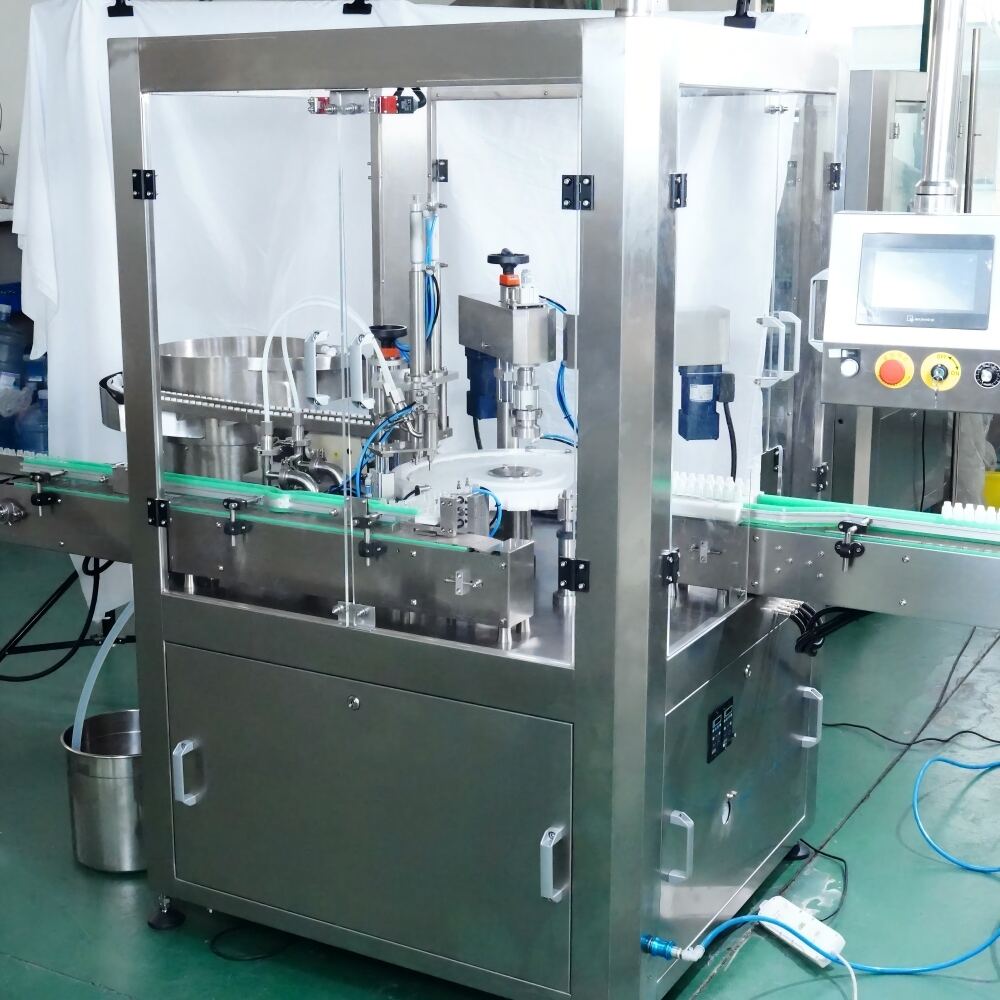
Manufacturing precision in liquid packaging operations depends heavily on advanced filling technology that delivers consistent, accurate results across high-volume production runs. Modern industrial facilities require equipment that can handle diverse viscosities, container sizes, and filling volumes while maintaining strict quality standards. A liquid filling machine represents the cornerstone of efficient packaging operations, utilizing sophisticated control systems and precision engineering to achieve remarkable accuracy levels. These automated systems have revolutionized how manufacturers approach liquid packaging challenges, offering unprecedented reliability and performance metrics that directly impact product quality and operational efficiency.
Advanced Control Systems in Precision Filling Technology
Programmable Logic Controllers and Servo Motors
The foundation of precision filling lies in sophisticated programmable logic controllers that coordinate every aspect of the filling process. These control systems integrate seamlessly with high-resolution servo motors that provide exact positioning and movement control for filling nozzles and conveyor systems. Each liquid filling machine incorporates multiple feedback loops that continuously monitor filling parameters, adjusting operations in real-time to maintain target specifications. The servo motor technology enables micro-adjustments during operation, ensuring that each container receives the precise volume regardless of variations in container positioning or liquid properties.
Advanced encoder systems work in conjunction with servo motors to provide position feedback with extraordinary accuracy, typically within 0.1mm tolerance levels. This precision translates directly to filling accuracy, as the exact positioning of containers relative to filling nozzles determines the consistency of liquid delivery. Modern control systems can store hundreds of different product recipes, allowing operators to switch between different liquid types and container formats without compromising accuracy standards.
Real-Time Monitoring and Feedback Systems
Contemporary filling equipment incorporates multiple sensor technologies that provide continuous monitoring of critical parameters throughout the filling cycle. Weight sensors, flow meters, and optical sensors work together to create a comprehensive monitoring network that tracks each container's progress through the filling station. This multi-sensor approach enables the liquid filling machine to detect and correct deviations before they impact product quality, maintaining consistent performance across extended production runs.
Data collection systems integrated within modern filling equipment provide operators with detailed analytics on filling performance, including statistical process control charts and trend analysis. These systems can identify patterns that might indicate wear in mechanical components or changes in liquid properties, allowing for predictive maintenance scheduling that prevents accuracy degradation over time.
Mechanical Precision Components and Design Features
High-Precision Valve Technology
The heart of accurate liquid dispensing lies in the valve technology employed within each filling station. Modern liquid filling machine designs utilize either positive displacement pumps or time-pressure filling valves, each engineered to deliver precise volumes with minimal variation. Positive displacement systems create exact volumetric chambers that ensure consistent liquid delivery regardless of viscosity changes or pressure fluctuations within the supply system.
Time-pressure filling valves incorporate precision-machined components with extremely tight tolerances, typically maintaining accuracy levels within ±0.5% of target volume. These valves feature quick-acting mechanisms that provide clean cut-off characteristics, preventing dripping or overflow conditions that could compromise filling accuracy. The valve seats and sealing surfaces undergo specialized finishing processes to ensure consistent sealing performance throughout millions of operating cycles.
Container Handling and Positioning Systems
Accurate filling requires precise container positioning that maintains consistent spatial relationships between containers and filling nozzles throughout the filling process. Star wheel indexing systems and linear conveyor designs incorporate mechanical guides and centering devices that ensure repeatable container positioning with minimal variation. These systems account for natural variations in container dimensions, automatically adjusting to maintain optimal filling conditions.
Container clamping and stabilization mechanisms prevent movement during the filling cycle, eliminating variables that could affect accuracy. Advanced systems incorporate container detection sensors that verify proper positioning before initiating the filling sequence, preventing partial fills or spills that could impact overall precision performance.
Calibration and Adjustment Protocols
Multi-Point Calibration Procedures
Maintaining long-term accuracy requires systematic calibration protocols that address all variables affecting filling precision. Professional-grade liquid filling machine installations incorporate multi-point calibration procedures that verify accuracy across the entire operating range of the equipment. These procedures typically involve testing with different container sizes, liquid viscosities, and filling volumes to establish comprehensive baseline performance data.
Calibration protocols include both volumetric and gravimetric verification methods, utilizing certified reference standards and precision measurement equipment. Regular calibration schedules ensure that filling accuracy remains within specified tolerances despite normal wear and environmental variations that occur during extended operation periods.
Environmental Compensation Systems
Temperature and pressure variations can significantly impact filling accuracy, particularly when handling temperature-sensitive liquids or operating in environments with fluctuating conditions. Modern filling systems incorporate environmental compensation algorithms that automatically adjust filling parameters based on real-time temperature and pressure measurements.
These compensation systems utilize mathematical models that correlate environmental conditions with liquid properties, enabling the liquid filling machine to maintain consistent accuracy regardless of seasonal temperature variations or facility climate control fluctuations. Advanced systems can predict and precompensate for environmental changes, maintaining optimal performance throughout varying operating conditions.
Quality Control Integration and Validation
In-Line Inspection Technologies
Modern liquid filling operations incorporate sophisticated inspection technologies that verify filling accuracy for every container processed. Weight check systems positioned immediately downstream from filling stations provide 100% inspection coverage, automatically rejecting containers that fall outside predetermined weight tolerances. These systems typically achieve measurement accuracy within ±0.1 grams, enabling detection of even minor filling variations.
Optical inspection systems complement weight checking by verifying fill levels through transparent containers, providing visual confirmation of proper filling performance. These systems can detect issues such as foam presence, liquid clarity problems, or container defects that might not be apparent through weight measurement alone.
Statistical Process Control Implementation
Advanced liquid filling machine installations integrate comprehensive statistical process control systems that continuously analyze filling performance data to identify trends and variations before they impact product quality. These systems generate control charts, capability studies, and process performance reports that provide operators with actionable insights for maintaining optimal performance.
Data trending capabilities enable prediction of maintenance requirements and identification of process improvements that can enhance overall filling accuracy. Integration with enterprise resource planning systems provides management with real-time visibility into production performance and quality metrics.
Maintenance Strategies for Sustained Precision
Predictive Maintenance Protocols
Maintaining long-term filling accuracy requires proactive maintenance strategies that address component wear before it impacts performance. Vibration analysis, thermal imaging, and oil analysis programs provide early warning of potential issues with servo motors, pumps, and mechanical drive systems. These predictive maintenance techniques enable scheduling of maintenance activities during planned downtime, preventing unexpected accuracy degradation.
Preventive maintenance schedules address critical wear items such as valve seats, O-rings, and pumping elements according to manufacturer recommendations and historical performance data. Regular replacement of these components ensures that the liquid filling machine maintains factory-specified accuracy levels throughout its operational life.
Component Replacement and Upgrade Strategies
Technology advancement continues to improve the precision capabilities of filling equipment components, making selective upgrades an effective strategy for enhancing overall system performance. Servo motor upgrades, improved sensor technologies, and advanced control software can significantly enhance filling accuracy without requiring complete equipment replacement.
Systematic component evaluation programs identify opportunities for precision improvements through targeted upgrades, maximizing return on investment while maintaining competitive performance levels in evolving market conditions.
FAQ
What factors most significantly impact liquid filling machine accuracy
Several critical factors determine filling accuracy, including valve design and condition, container positioning precision, liquid temperature stability, and control system calibration. Environmental conditions such as temperature and humidity variations can also affect accuracy, particularly with temperature-sensitive products. Regular calibration and maintenance of these systems ensures optimal performance levels are maintained throughout production operations.
How often should filling equipment be calibrated for optimal precision
Calibration frequency depends on production volume, product characteristics, and accuracy requirements, but most facilities benefit from weekly verification checks and monthly comprehensive calibrations. High-volume operations or critical applications may require daily verification procedures. Environmental factors and product changeovers may necessitate more frequent calibration to maintain specified accuracy levels consistently.
Can liquid filling machines maintain accuracy across different product viscosities
Modern liquid filling machine designs can accommodate significant viscosity variations through adjustable parameters and compensation algorithms. Different filling methods such as positive displacement pumps or time-pressure systems offer varying degrees of viscosity independence. Proper setup and calibration for each product ensures accurate filling across the entire range of liquid properties encountered in typical production environments.
What accuracy levels can be achieved with current filling technology
Contemporary liquid filling machine technology routinely achieves accuracy levels within ±0.5% of target volume, with premium systems capable of ±0.2% or better under optimal conditions. These accuracy levels depend on proper equipment selection, installation, calibration, and maintenance procedures. Consistent accuracy performance requires attention to all system components and regular verification of performance against established standards.